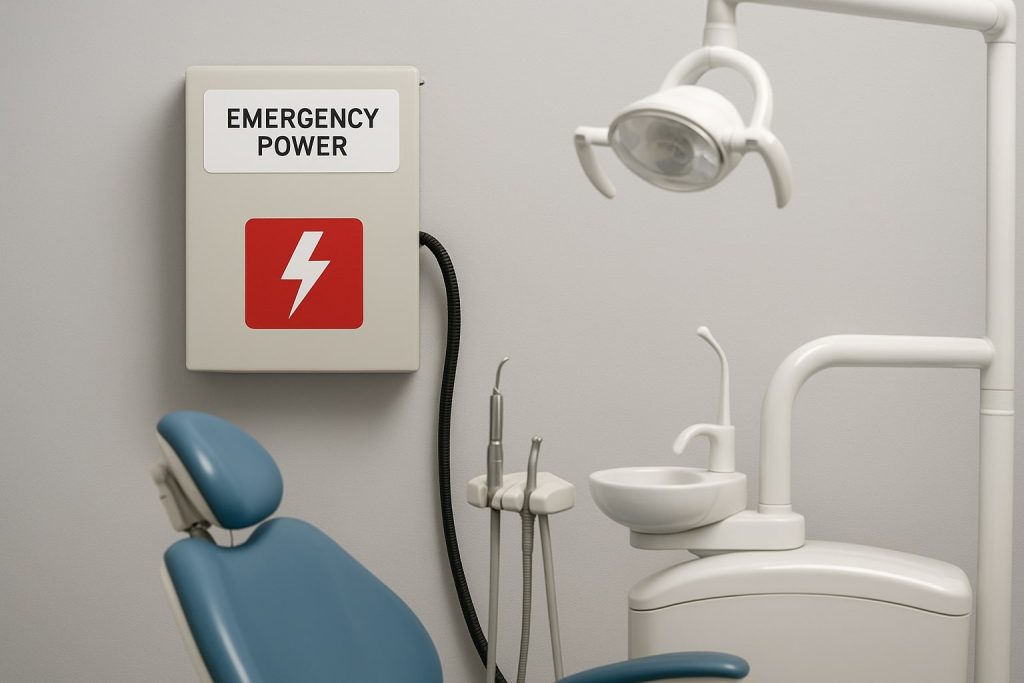
Power outages in clinics and medical offices are not just a simple inconvenience—they can damage sensitive equipment, disrupt patient care, and cause significant financial losses. Imagine a dental clinic where the power suddenly goes out during surgery; such scenarios highlight the importance of emergency power for clinics and using a clinic UPS or office UPS.
On the other hand, many common devices such as computers, cash registers, modems, CCTV cameras, PBX phones, small drug refrigerators, and even low-consumption BLDC air conditioners do not require an online UPS and can be well protected with a line-interactive UPS. This type of UPS offers an affordable cost, easy maintenance, and reliable performance, making it the best choice for emergency power in offices and medical centers.
In this article, in addition to introducing the benefits and applications of a line-interactive UPS, we will review a complete list of clinics and medical centers that have the greatest need for an emergency power system. If you are the owner or manager of a clinic, beauty center, dental office, physiotherapy center, or any other medical facility, this guide can help you make the best choice for ensuring stable power.
What UPS Capacity Is Suitable for Clinics, Offices, and Medical Centers?
Choosing the right capacity for your clinic UPS or office UPS depends on the number and type of electrical devices you use. The more equipment you have — such as computers, cash registers, modems, cameras, medical refrigerators, or BLDC air conditioners — the higher the required capacity will be. The key point is that most clinics and medical offices can use a line-interactive UPS for their light medical and office equipment. This model not only costs less but also provides complete backup for commonly used devices, making it the best choice for emergency power in medical centers.Difference Between a UPS and a Generator in Clinics, Offices, and Medical Centers
At first glance, both a UPS (Uninterruptible Power Supply) and a generator are used to provide emergency power; however, their functions and applications in clinics and medical offices are completely different.Clinic UPS (Uninterruptible Power Supply)
- Provides instant, uninterrupted power during outages.
- Protects sensitive devices such as computers, cash registers, modems, cameras, medical refrigerators, and other light equipment.
- Compact, quiet, and requires no fuel.
- For most medical offices, a line-interactive UPS is the most practical and cost-effective choice.
Generator
- Requires a few minutes to start up.
- Noisy and needs fuel and regular maintenance.
- Better suited for heavy-duty equipment or prolonged power use.
- Produces voltage fluctuations and cannot protect sensitive devices on its own.
What Is a Clinic, Office, or Medical Center UPS and What Does It Do?
A clinic UPS or office UPS is an uninterruptible power supply system that immediately activates during a power outage, providing the emergency electricity needed for medical and administrative equipment. In addition to preventing sudden shutdowns, it also regulates voltage fluctuations and protects sensitive devices from power surges or drops. In most clinics and medical centers, UPS systems are used for devices such as computers, cash registers, card readers, modems and routers, CCTV cameras, PBX phones, medical refrigerators, and energy-efficient BLDC air conditioners. Therefore, having emergency power in a clinic not only helps protect your equipment but also ensures that medical services continue without interruption during a power outage. In simple terms:- UPS Function – Provides immediate, stable, and safe power
- Main Advantage – Protects equipment and keeps the clinic operating without disruption
Dangers of Power Outages in Clinics, Offices, and Medical Centers
Power outages in clinics, medical offices, and healthcare centers can have serious consequences, including:- Disruption of Medical Services
- Risk to Sensitive Equipment
- Threat to Patient Safety
- Loss of Critical Data
- Reduced Patient Satisfaction
Comparison of UPS and Generator in Clinics, Medical Offices, and Healthcare Centers
| Feature | UPS (Clinic/Office UPS) | Generator |
| Power Supply Time | Immediate and uninterrupted | With a delay of a few minutes |
| Suitable For | Sensitive devices (computers, cash registers, modems, cameras, PBX, medicine refrigerator) | Heavy loads and long-term consumption |
| Voltage Stability | Very stable (protects equipment) | Fluctuates and may harm devices |
| Noise and Pollution | Completely silent and pollution-free | Noisy, requires fuel, and emits smoke |
| Maintenance Cost | Low | High (fuel, oil, periodic service) |
| Size and Required Space | Compact and installable in clinic/office | Larger, requires open space or separate room |
| Cost-effectiveness | Suitable for small to medium clinics and offices | Suitable for large centers and high-consumption devices |